


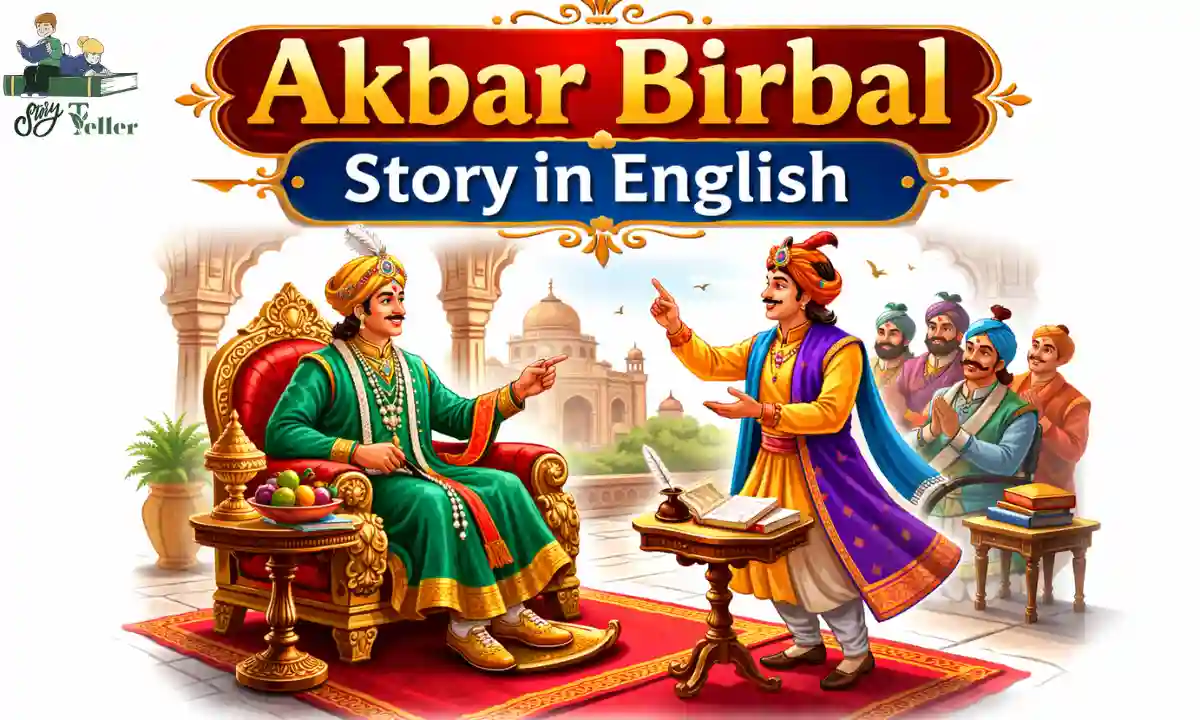
The stories of Emperor Akbar and Birbal are among India’s most beloved and enduring folk tales. These tales mix history and humorous legend to capture the wit, loyalty, and intelligence of Birbal one of the most famed courtiers in Akbar’s imperial court. Though many of the stories are folklore rather than strict recorded history, they continue to teach life lessons, inspire laughter, and celebrate wisdom and justice.
Who Were Akbar and Birbal?
Emperor Akbar was one of the most powerful and influential rulers of the Mughal Empire in India. Known for his visionary leadership, religious tolerance, and administrative genius, he reigned from 1556 to 1605 and expanded the empire across most of the subcontinent.
Birbal, originally named Mahesh Das, was born in 1528 to a Brahmin family in present-day Uttar Pradesh. He became famous not just as a courtier but as a wise, witty and quick-thinking advisor to the emperor. Akbar awarded him the title “Birbal,” meaning brave and clever, and made him one of the key members of his inner council the Navaratnas (Nine Jewels) of his court.
Historical Relationship Between Akbar and Birbal
Birbal first joined Akbar’s court sometime between 1556 and 1562 after impressing the emperor with his intelligence and poetic talent. Initially a poet and musician, Birbal’s wisdom and humor soon brought him into closer companionship with Akbar. Within a few years, he was appointed “Kavi Priya” (poet laureate) and later rose to be one of the emperor’s most trusted advisers.
Their friendship was rare in that Akbar, a Muslim emperor, deeply valued and trusted a Hindu courtier to the extent that Birbal became one of the few followers of Akbar’s spiritual movement Din-i Ilahi, which emphasized unity among religions.
Akbar-Birbal Stories: What Are They?
The Akbar-Birbal stories are a large collection of folk tales that revolve around witty exchanges, clever solutions, and humorous situations. These tales became popular mostly through oral tradition and later literature, and not from official Mughal records. Many historians argue that most of these tales originated centuries after Birbal’s death and were woven around his historical personality to entertain, teach morals, and highlight intelligence triumphing over ignorance.
Why These Stories Became Popular
- Fun and simple: They’re easy to remember and retell, making them perfect for children’s stories.
- Moral lessons: Each tale commonly ends with a lesson about fairness, honesty, or intelligence.
- Cultural significance: These stories became part of Indian popular culture, appearing in books, television shows, and school textbooks.
Akbar Birbal Story in English
Below are a few classic Birbal tales retold in simple English:
1. The Half Reward Story
One day, a young man approached Akbar asking for 50 lashes as punishment because he had promised half his future reward from the emperor to a guard. After receiving half the lashes (25), he insisted the guard deserved the other half of his reward too. When the guard agreed, Akbar reversed the reward and gave the guard 50 lashes instead brilliantly revealing the unfair reasoning. The emperor was amused and impressed and invited Birbal into his court.
Moral: Clever logic can turn even bad situations in favor of fairness.
2. Whose Servant Are You?
In another tale, Akbar once praised brinjal (eggplant). Birbal agreed and even exaggerated praise until the emperor changed his opinion, suddenly claiming brinjal is unhealthy. Birbal again agreed immediately and fully showing he was loyal to the emperor, not to the subject of discussion.
Moral: True loyalty is to the person, not to shallow ideas.
3. Counting the Blind
Akbar once asked Birbal to distribute alms to all the blind in the kingdom, but a list of blind people was too short. Birbal cleverly pointed out that blind people outnumber those who can see, proving that mercy should go beyond lists and paperwork showing empathy and common sense.
Moral: True justice must be broad, not just literal.
The Real Birbal Behind the Stories
Though the tales are legendary, the real Birbal was more than just a jester. Historical accounts show that:
- He was a poet, singer, and scholar before joining Akbar’s court.
- Akbar favored his intelligence so much that Birbal was given special titles and jagir (land grants).
- He took on administrative duties and even military command.
How Did Birbal’s Life End?
The historical Birbal died on 16 February 1586 during the Battle of Malandari Pass (in present-day Pakistan). He was leading a Mughal force against Afghan tribes when they were ambushed and defeated. He perished along with many soldiers.
Akbar was deeply saddened by Birbal’s death, showing how significant their bond had been. The young, witty counselor had left a lasting legacy in both history and storytelling.
Legacy: Akbar-Birbal in Culture and Media
The Akbar-Birbal stories continue to live on today through:
- Books and collections featuring humorous tales.
- Television series and animated shows.
- School literature and educational storytelling for kids.
Their legacy shows the timeless value of intelligence, wit, and ethical thinking.
Conclusion: Why Akbar-Birbal Stories Matter
The Akbar-Birbal stories though mostly legendary represent more than folklore. They teach us to:
- Think clearly and cleverly
- Solve problems with logic
- Be fair and just in judgments
- Value humor even in serious matters
Whether you read them as history or fable, the tales of Akbar and Birbal remain an unforgettable part of Indian cultural heritage.
FAQs
Were Akbar and Birbal real historical figures?
Yes — Akbar was a real Mughal emperor and Birbal was a courtier in his court. But many stories told about them are folk tales, not strict historical records.
Where did Birbal come from?
Birbal was born as Mahesh Das in 1528 in what is now Uttar Pradesh, India.
Why are the stories still popular?
Because they’re entertaining and carry deeper moral and logical lessons that appeal to all ages.
Did Birbal really outsmart other courtiers?
Most such stories are folklore passed down over time; they reflect wisdom traditions more than documented court events.
Also, Read Our More Stories: Tenali Raman Small Story in English for Kids